<!DOCTYPE html>
Lowering Your Carbon Footprint With High Efficiency Cooling Upgrades
Lowering Your Carbon Footprint With High Efficiency Cooling Upgrades
Sandy sits on the Wasatch Front at about 4,400 feet. Homes near Dimple Dell, Hidden Valley, and the Little Cottonwood Canyon corridor face a distinct cooling profile. Thin mountain air lowers heat transfer. Canyon winds drive granite dust into condenser fins. Dry air pulls lubrication from blower bearings. High day-to-night swings spike electrical stress on start components. Those conditions create waste, raised emissions, and shorter equipment life when systems run out of calibration. The flipside is clear. Precision upgrades and steady AC maintenance in Sandy, UT produce measurable carbon reductions and real savings without giving up comfort.
Why Sandy’s High-Desert Climate Changes the Cooling Equation
Cooling loads in Sandy are mainly sensible. Humidity is low, so latent load is small. That means steady airflow, accurate refrigerant charge, and clean heat exchange surfaces matter more than dehumidification. At this elevation, a system’s capacity falls compared with sea level. Compressors move less mass flow in thin air, so a unit that worked fine in a valley city can struggle on the benches above 4,000 feet.
Local dust is not generic. Granite particulates ride canyon winds out of Little Cottonwood and settle in condenser fins and fan housings. Static pressure rises as dust builds. The motor draws more amps. Head pressure climbs and compressor discharge temperature spikes. That raises power use and emissions and can lead to soft short cycling. It also dries blower bearings and ages capacitors. Precision cleaning and correct motor programming take that waste out of the system.
Homes in Sandy vary by neighborhood and age. Hidden Valley and Alta View estates often have large square footage with vaulted spaces. State Street corridor properties mix light commercial and residential package units. Newer subdivisions near 84093 and 84094 carry tighter envelopes, dual-fuel heat pumps, and communicating controls. Each scenario needs different tuning and sometimes different upgrades to cut kilowatt-hours and carbon output.
Defining “High Efficiency” Where It Counts
High efficiency on paper means strong SEER2 and EER2 numbers. Real efficiency in Sandy adds three local factors. First, variable capacity that holds steady comfort during wide temperature swings. Second, altitude calibration for blower speed, static pressure, and refrigerant charge. Third, clean surfaces and healthy electrical components that keep a unit inside design targets under granite dust exposure.
Variable-speed compressors and ECM blower motors are the most impactful shift for carbon reduction in this market. Inverter systems hold tighter supply temperatures, avoid frequent starts, and track the sensible load better than single-stage units. They run longer at lower power. They also reduce inrush current, which cuts electrical stress on contactors and capacitors. That matters on July days that run from mild mornings to hard afternoons, then back to cool nights.
High-efficiency filtration supports the same goal. A MERV 11 to MERV 13 media filter traps Wasatch dust without choking airflow when the duct system is sized and sealed correctly. In homes with older return drops, a filter rack redesign pays off. Proper face velocity targets keep pressure under control, which protects the blower and keeps power draw down.
Altitude Calibration and Why It Lowers Emissions
At roughly 4,400 feet, blower performance curves shift. Air density falls, so the fan has to work harder to move the same CFM per ton. Without calibration, installers often set a one-size speed tap that misses the mark. That error compounds after dust builds on coils and filters. The system runs hot, pulls more current, and delivers less cooling to the rooms that need it. Routine verification brings the system back to target.
A practical range for airflow is 350 to 425 CFM per ton in this region, based on duct condition and comfort goals. Static pressure should sit near the equipment’s rated external static, often around 0.5 in. W.c. For standard residential air handlers. Precise numbers vary by model. A NATE-certified technician can measure external static, plot blower performance, and set ECM profiles for high-altitude duty. That single step reduces power waste every time the unit cycles.
Charge verification is the next piece. Proper R-410A charge cannot be guessed. It requires temperature and pressure readings and the manufacturer’s tables. High desert evenings cool fast. Subcooling and superheat drift as the ambient falls. A correct baseline during a seasonal inspection keeps energy use down and protects the compressor from flooding or starvation when summer peaks hit.
Maintenance as a Carbon Reduction Strategy
There is no upgrade that can outrun a neglected system. In Sandy’s dusty, arid climate, a multi-point precision inspection once per cooling season has a direct effect on emissions. Condenser coil power washing removes granite dust that strangles heat rejection. Evaporator coil inspection reveals biofilm or lint that starves airflow at the source. Amp draw testing on the condenser fan motor, indoor blower, and compressor spots drift before it becomes a hard failure on a 100-degree day.
Electrical parts fail faster in homes that ride wide temperature spans. Capacitors swell and drop capacitance. Contactors pit. Loose lugs arc. Replacing a weak run capacitor before July stops a spike in current and can prevent nuisance short cycling. That is a quiet carbon win, because every hard start wastes power and stresses windings. Blower motor lubrication also matters in older sleeve-bearing assemblies. The arid air evaporates oil. Dry bearings drag and draw more amps for months before owners notice.
Documentation is part of the value. Many Lennox, Trane, Carrier, and Goodman warranties require annual professional maintenance under EPA Section 608 and brand guidelines. A clear service record protects that coverage while keeping the system inside factory performance targets. For dual-fuel systems, a heat exchanger safety check in shoulder seasons confirms that fossil backup heat remains safe and sealed before winter arrives.
Five High-Impact Upgrades That Cut Kilowatts and Emissions
Some changes deliver big returns in Sandy. These upgrades combine engineering impact with local conditions to reduce the home’s cooling carbon footprint and lower Rocky Mountain Power costs.
- Inverter Heat Pump or AC Condenser Upgrade: Variable-speed compressors maintain steadier coil temperatures and reduce cycling. Expect smoother comfort on Dimple Dell ridge days with large temperature swings. Pair with a matching communicating air handler for full benefit.
- ECM Blower Motor Retrofit: In homes with sound coils and acceptable ducts, an ECM retrofit lowers watt draw and supports altitude-calibrated airflow. It also integrates well with smart thermostats that call for low-stage circulation.
- Condenser Coil Fin Rebuild and Guard: After a power wash, fin combing and a cage-style guard help block canyon debris. Keeping fins straight and clear protects SEER2 performance through the season.
- Duct Sealing and Return-Side Redesign: Many 84070 and 84094 builds have undersized return drops. A new return grille and sealed plenums can remove 0.1 to 0.2 in. W.c. Of static. That single change drops blower amps and noise, and restores room-to-room balance.
- Smart Thermostat With Demand Response: New controls can join Rocky Mountain Power events and stage equipment in a way that cuts peak use without losing comfort. Setpoint strategies at altitude favor slow ramps rather than deep setbacks.
Each item has a load-based case. An engineer-level review should start with Manual J for load, then Manual S for equipment selection, and Manual D for ducts. A short comfort interview often reveals hidden constraints such as west-facing glazing in Alta View or bonus rooms above garages near the State Street corridor. Matching the upgrade to those details yields carbon cuts that actually last.
Seasonal Tune-Ups and the Sandy Maintenance Protocol
Precision HVAC Tune-Ups solve the waste that hides in electrical drift, dust, and airflow error. A complete visit in Sandy should include condenser coil power washing, evaporator coil inspection, refrigerant charge verification, blower motor lubrication when applicable, and a full electrical component audit. Amp draw testing reveals motors working harder than they should. Contactors and capacitors get tested under load, not just by appearance. For hybrid systems, technicians should check the changeover thresholds that control when the gas furnace takes over from the heat pump.
Local context matters. Homes along the Little Cottonwood Canyon edge see higher dust loads than those near Sandy City Center. Roof-mounted package units near State Street can bake under sun and absorb more grime from traffic. Multi-level homes in Hidden Valley often struggle with top-floor airflow on July afternoons. A qualified team can adjust blower profiles, verify static pressure by floor, and set realistic cooling curves. That attention cuts runtime and curbs emissions without sacrificing comfort.
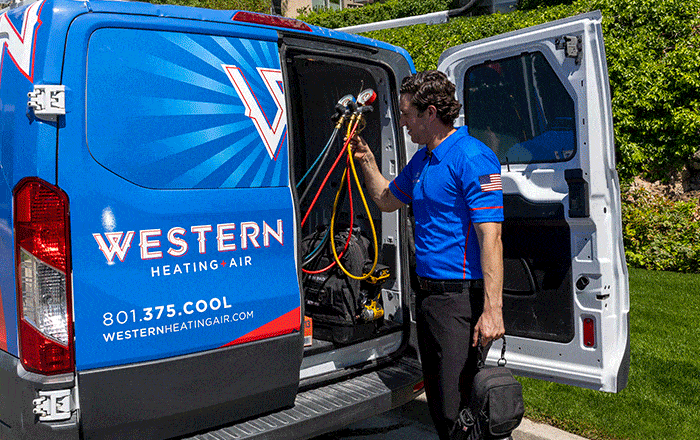
Western Heating, Air & Plumbing fields NATE-certified and RMGA-certified technicians familiar with high-altitude requirements. EPA Section 608 compliance is standard. The team services Lennox, Carrier, Trane, Rheem, Goodman, Bryant, York, and Mitsubishi mini-split systems across Sandy zip codes 84070, 84090, 84091, 84092, 84093, and 84094. Transparent digital reports show photos, readings, and corrective actions so owners can see exactly why the system is running better after the visit.
How SEER2 and EER2 Translate on the Wasatch Front
SEER2 reflects seasonal efficiency under new test protocols that better match ducted installations. EER2 shows steady-state efficiency at a set condition. At altitude, both numbers tend to slide in real use if airflow, ducts, and coils are not right. A system that rates well in a lab can fall behind after a few weeks of granite dust and a plugged return path. The result is higher kWh per degree of cooling and avoidable emissions.
That is why upgrades must include the “boring” parts. A clean condenser coil can drop head pressure by 30 to 70 psi, depending on the starting point. That change can save hundreds of watts at the compressor on a hot day. An unrestricted return can shave 0.05 to 0.15 in. W.c. From external static, saving tens of watts at the blower throughout the season. Over a Sandy summer, those small wins compound into meaningful carbon reduction.
Variable Capacity vs. Single-Stage in Sandy Homes
Single-stage units work hard to catch up after each thermostat call. In a city with cool nights and hot afternoons, that means frequent starts and stops. The energy spike at each start is not huge by itself, but multiplied over a season it adds up. Variable capacity units start gently, run longer at low capacity, and track the sensible load from hour to hour. That match improves comfort in homes with west-facing windows in 84093 and 84094, where solar gain swings fast.
Mini-splits from Mitsubishi or ducted inverter systems from Lennox, Carrier, Trane, and others also address hard rooms. A bonus room can get a dedicated head. That reduces the need to overcool the rest of the home to satisfy one zone. Less waste, fewer emissions, and steadier comfort follow.
Airflow, Static Pressure, and Carbon Output
Airflow is the backbone of efficient cooling. Many Sandy homes run with high static because of tight filter media on undersized returns, kinked flex runs in attics, or restrictive grilles. The blower compensates by drawing more current. The evaporator coil can freeze under low flow, which then triggers short cycling and a defrost mess that wastes power. Careful duct review with a static pressure measurement gives a clear path to cut consumption.
Typical targets work like this. Keep total external static near or under the equipment rating. Keep coil and filter pressure drops inside manufacturer specs. Aim for even room flows verified with a balancing hood, not guesswork at registers. A minor change to a return drop or a high-flow grille can bring the system back into range. That lower resistance turns into watt savings and fewer emissions every hour the fan runs.
Refrigerant Charge, Thin Air, and Real-World Setpoints
Charge that is even a little off will cost more energy in Sandy than it would at lower elevation. Undercharge in thin air means low suction pressure and reduced capacity. Overcharge drives high head pressure and compressor heat. Seasonal charge checks with proper instruments and ambient corrections keep the system in the sweet spot. That is vital for heat pumps that serve as primary cooling in neighborhoods near the Wasatch foothills. Proper subcooling and superheat also protect the compressor during evening temperature drops common on the benches.
Setpoint strategy plays a part too. Deep daytime setbacks can cause long recovery runs that spike energy use. With inverter systems, a modest setback and a steady curve often saves more. Smart controls can learn that pattern and shift the ramp based on past days. For Rocky Mountain Power customers, demand response integration can trim peak load without pushing rooms out of comfort ranges.
Filtration, Indoor Air Quality, and Dust From the Canyons
Granite dust is abrasive. It chews at blower wheels and adds static load. A MERV 11 or MERV 13 media filter catches more of it without locking up the return path when the filter area is right. In homes near Little Cottonwood Canyon, adding a pre-filter at the return grille can protect the main media and extend service life. UV lights are optional for coil hygiene. They do not replace cleaning, but they keep biofilm from adding to pressure drop between cleanings.
For households with allergies, a sealed return path paired with a high-grade filter brings two wins. Health improves, and the blower runs easier. Lower resistance equals less power draw. Less power draw equals fewer emissions. The path is simple and measurable.
Dual-Fuel Optimization for Shoulder Seasons
Many Sandy homes use dual-fuel systems. They run a heat pump for mild weather and a gas furnace when it gets cold. Changeover points set at installation often stay fixed for years even as energy prices and comfort needs shift. A fresh check can move the balance toward lower carbon output. In spring and fall, a heat pump can handle most loads. A correct changeover threshold, based on actual capacity and utility rates, reduces gas use and emissions without sacrifice.
Testing the heat exchanger with a combustion analyzer and checking venting under RMGA practices keeps safety intact. Verifying the thermostat’s dual-fuel lockout logic finishes the tune. Owners get cleaner operation, longer equipment life, and steadier comfort during Utah’s shoulder months.
What Owners Notice After a Proper Tune-Up
The first sign is quieter operation. Clean condensers and balanced airflow reduce fan strain. Supply temperatures hold steady instead of swinging. Rooms at the far ends of runs, common in two-story homes in 84092 and 84093, get closer to setpoint. Power bills flatten. On service visits after tune-ups, technicians often find compressors running cooler by 10 to 20 degrees on discharge, with healthier amp draws. Those are direct carbon reductions in action.
Breakdowns slow down too. Replacing a marginal capacitor or tighten a loose lug before a heat wave prevents a stack of wasted restarts. Owners in Sandy City Center and the State Street corridor with rooftop package units notice fewer midday service calls because the machines stop fighting high head pressures caused by dirty fins and failed fans.
Practical Budget Paths for Sandy Households
Every home and budget has limits. A smart path starts with maintenance and airflow corrections. Those changes often unlock enough efficiency to justify the next step. The next step could be an ECM blower retrofit or a thermostat upgrade with demand response. When an outdoor unit nears the end, stepping into a SEER2-rated variable capacity condenser completes the package. Larger homes in Hidden Valley and Alta View benefit most because runtime hours are high and the envelope handles wide gains from afternoon sun.
For light commercial sites along State Street, coil cleaning and contactor replacement should be annual. Rooftop units see high sun load and traffic dust. Proactive part swaps save weekday shutdowns and wasted peak kWh. Keeping a clean record also supports warranty validation on Carrier, Bryant, or York package systems.
Quick Owner Checklist Before Peak Heat
This short list helps keep the system ready for a Wasatch summer and trims avoidable power waste. It pairs well with a professional tune-up.
- Check the outdoor unit for cottonwood and canyon debris; keep 18 inches clear on all sides.
- Replace the media filter if pressure drop or dust build-up is visible; consider MERV 11 to MERV 13 with proper area.
- Set the smart thermostat to modest setbacks; avoid deep daytime drops that cause long recoveries.
- Confirm supply registers and returns are fully open; blocked returns raise static and blower amps.
- Schedule spring AC maintenance in Sandy, UT to verify charge, airflow, and electrical health before July.
These actions cost little and prevent the worst summer failures. They also support lower emissions because the unit stays inside its designed operating window.
What a High-Efficiency Upgrade Looks Like in Practice
Consider a two-story 3,200 square foot home near Dimple Dell. The original 4-ton single-stage unit struggled in late afternoons. Static ran at 0.9 in. W.c., and the return was undersized. The upgrade plan moved to a 3.5-ton inverter condenser with a matching communicating air handler and a new high-flow return. After duct changes, static fell to 0.55 in. W.c. The technician recalibrated blower profiles for altitude and set a mild setback on a learning thermostat. The owner saw smoother room temperatures and a measurable drop in Rocky Mountain Power usage over the next billing cycles. Noise fell, nighttime comfort improved, and maintenance uncovered a weak run capacitor before the first heat wave. The practical outcome was lower emissions with better comfort.
On a State Street office suite with a rooftop package unit, the issue was head pressure. Coils were matted with traffic dust. A power wash, fresh contactor, and a fan motor with correct rotation returned the unit to expected head pressure. The unit stopped short cycling, and afternoon trips to the roof stopped. Power consumption logged on the panel meter dropped immediately. That single service call paid back over the summer and trimmed the building’s carbon output.
Western Heating, Air & Plumbing’s Role in Sandy, UT
Western Heating, Air & Plumbing supports homeowners and small businesses across Sandy’s 84070, 84090, 84091, 84092, 84093, and 84094 zip codes. The company performs Seasonal Cooling Inspections, Preventative HVAC Care, and precision HVAC Tune-Ups matched to high-altitude desert conditions. Each job documents readings and results. That improves equipment life, validates manufacturer warranties on brands such as Lennox, Carrier, Trane, Rheem, Goodman, Bryant, York, and Mitsubishi, and protects performance through the Wasatch cooling season.
The team follows the Sandy Maintenance Protocol. That means condenser coil power cleaning to remove Wasatch dust, evaporator coil inspection, refrigerant charge verification for R-410A systems, blower motor lubrication when the design calls for it, and a heat exchanger safety check for dual-fuel systems during shoulder months. Electrical component audits include testing capacitors, contactors, and relays under expected load. Amp draw testing confirms motors are running inside spec. Static pressure and airflow verification check the duct system against the equipment’s capabilities. That depth is why the tune-up cuts both costs and emissions for clients from Hidden Valley to Sandy City Center.
For owners building a longer plan, Western provides 2026 SEER2 compliance checks, Annual Maintenance Plans, and Priority Service Status for members. Those items matter when July fills the schedule after the first heat wave. Members move to the front so a minor issue does not become a failure. That approach supports lower community emissions because tuned systems run cleaner across the grid during peak hours.
Targeted Answers to Common Sandy Questions
Does altitude reduce capacity enough to change equipment sizing? Yes. It does not always change tonnage, but it affects airflow targets and sometimes pushes the design toward variable capacity for better part-load control. Should owners reduce setback depth? In many Sandy homes, yes. A modest setback avoids long recoveries that waste energy. Is MERV 13 too restrictive? Not when the return and rack size match the media. Many homes benefit from a larger return and a deeper filter cabinet. Does a dual-fuel system still make sense with a modern heat pump? Often yes, but the changeover threshold should be tested against actual utility costs and the home’s envelope. Can capacitor and contactor checks really cut emissions? Yes. They stop hard starts and short cycles that burn watts with no comfort gain.
AC Maintenance Sandy, UT | Precision HVAC Tune-Ups
Proactive care is the lowest-cost carbon reduction. A clean, calibrated system pulls fewer amps and lasts longer. Western Heating, Air & Plumbing brings RMGA and NATE-certified skill sets to that task. EPA Section 608 certification is standard. The team services residential and light commercial equipment throughout Salt Lake County with clear digital reports and photos after each visit. The process addresses Sandy’s exact stressors: Wasatch dust, altitude airflow, and wide temperature swings that pound electrical parts.
For homeowners who prize comfort and lower emissions, the path is straightforward. Start with a seasonal tune-up that corrects airflow, charge, and electrical issues. Upgrade filtration and returns to match the equipment. Then consider an inverter condenser or a ducted heat pump when replacement timing makes sense. That staged plan reduces Rocky Mountain Power bills, shrinks the home’s carbon footprint, and improves comfort in every room.
Western Heating, Air & Plumbing provides HVAC and plumbing services for homeowners and businesses across Sandy and the surrounding Utah communities. Since 1995, our team has handled heating and cooling installation, repair, and upkeep, along with ductwork, water heaters, drains, and general plumbing needs. We offer dependable service, honest guidance, and emergency support when problems can’t wait. As a family-operated company, we work to keep your space comfortable, safe, and running smoothly—backed by thousands of positive reviews from satisfied customers.
Western Heating, Air & Plumbing
9192 S 300 W
Sandy,
UT
84070,
USA
231 E 400 S Unit 104C
Salt Lake City,
UT
84111,
USA
Phone: (385) 233-9556
Website: https://westernheatingair.com/, Furnace Services
Social Media:
Instagram |
Facebook |
BBB
Map: View on Google Maps